from The Tenth Muse
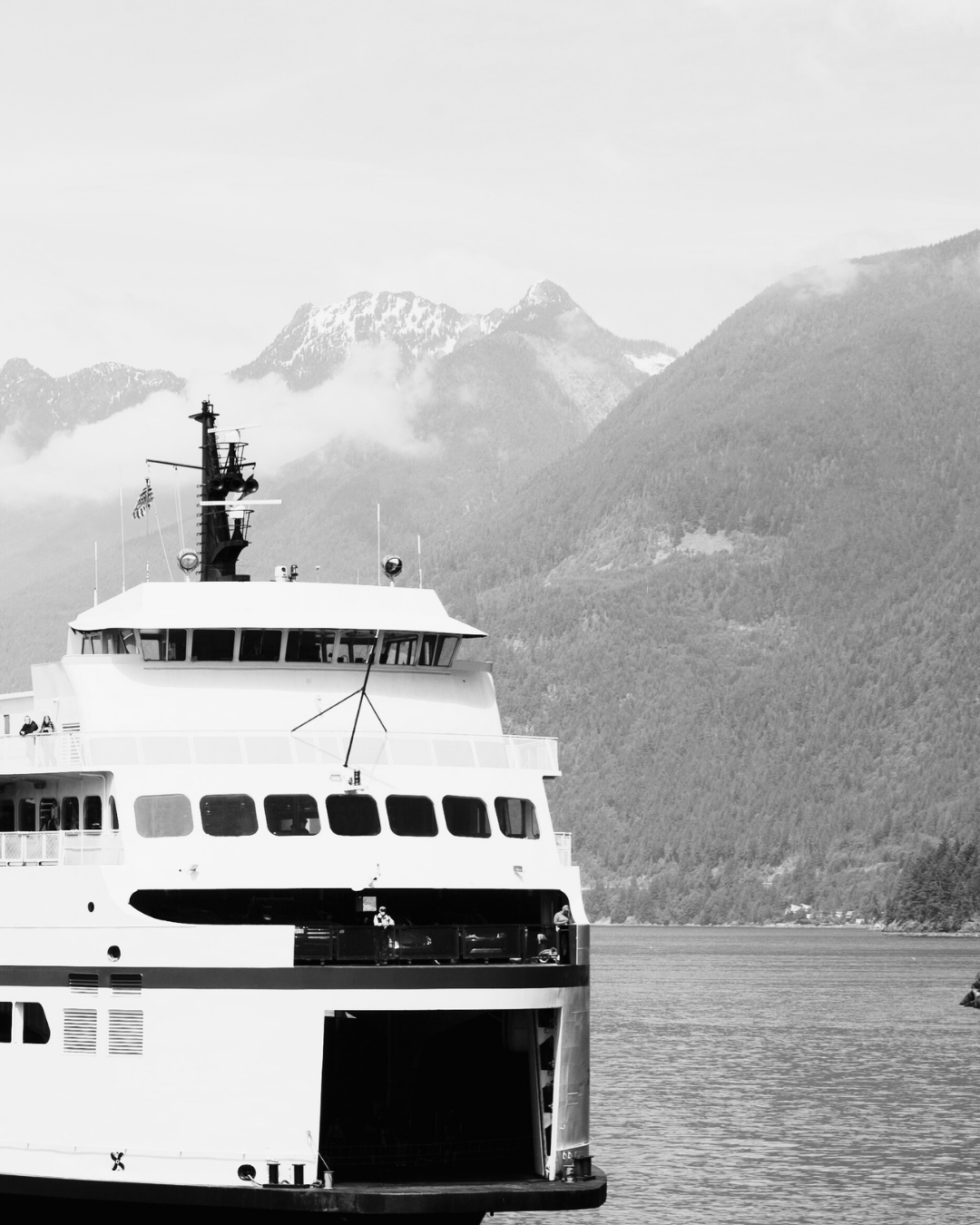
On the island, in the shade of the arbutus and fir, Marta grew up with her friend, Athena. The sun skimmed shoulders, heavy with sea, as they swam the lengths of coves; dew cooled faces in the green mossy forests as they hiked ellipses. Love stirred in the heart of young Athena with Marta beside her, walking the road to town, yarrow and foxglove blooming from ditches in dusky golden light.
Marta: strong and lovely; long-limbed; turning outward to the world with uncomplicated grace. Athena loved the way she moved, her fluid instincts, athletic; hungry and intuitive; she loved everything that Marta thought and wrote and spoke.
Athena knew that Marta would not become ordinary, small. No, and she, Athena, did not want that fate either. She wanted to follow Marta. She saw her growing to be a satisfied woman, a poet, a light among the dark. And if ever she became a god, if ever she entered that golden circle of enlightenment, (and Marta was a being that made you believe she could), then Athena wanted to follow her as her lover, her friend, her partner, her protector, her advocate. That was how everyone loved Marta; she saw you and she made you seen.
But Marta herself did not feel seen, not truly. Wandering the winding roads of the small island, along the trails that wound up altitudes enchanted by fairies, sitting in thought on the shale-rocked ocean’s edge, washing her soul in her daily pages of atonement, generous in her attention to a world so thirsty and distracted. Beloved by all, a joy to all, there was little joy of her own.
Already she had read a thousand books, engaged in a thousand conversations with the learned women of the island; already she knew to cultivate the thousand-onioned layers in a line, the abacus march of the stressed and unstressed- world of words, rhythmic counting of fingers below the knuckle, slash and u-shape, tapping along in the recesses of creation. And she knew on this island, in this light, she could not be seen for who she really was - too bright to make visible the dark, false without shade, truth an interminable ingredient of joy. Dreams and restless thoughts came in on the ocean breeze, small and lapping; at times, then crashing and swallowing whole days. They came in the deer who fearlessly nibbled young greens from her mother’s vegetable garden; in dapple sunlight and misty rain; they came in the smoke rising from early spring burn piles - razed blackberry brambles flashing her achy, restless soul.
Marta had begun to feel that the love of her mother and her father and also the love of her friend, Athena, would not always fill her, would not always inspire her. She had begun to suspect that her wise mother and her other teachers, the learned women of the island, professors, scholars, artists, had no more to give. And she, still so hungry - starving - withering into the ground from which she burst. The books were fine but they were a pool she had lapped and lapped until so bloated, she was sinking; the stale words no longer whet. Luxuriously-bound classics and volumes of poetry were beautiful and important, but were they all that there was? Had the sum total of life already been learned? Were we repeating a history preordained? The same ideas again and again on different pages in different ways. And what of god? Are we doomed to dwell in the temporal collective until we, as a species, die? Gender and race and sexual orientation and citizenship and accent and wealth and politics- so many excuses to hate, to resent, to hurt, to hide, to scar, to harden hearts against our fellow humans, our sisters, who seek contentment and run from pain just as our own hearts do. Where is a god in all of this? Lost in the vitriolic rage spewed in his name, shut weeping behind doors of righteous selfishness, quietly ignored on the back deck of our souls like the spiteful uncle who has taught us vengeful punishment for our human mistakes and now, sickly and old, is trotted out only at holidays, hardly tolerated, poked and fluffed and sharpened to our own ends. Or deleted entirely in the pursuit of the rational; willfully blind to the magic irrationally unfolding in every crevice of every life at every moment. Was it sane to commit so much energy and brilliance to battling injustice in its highest forms when the real solution lies each time in the most basic, suffering human heart? To heal that heart enough to open it to the universal truths, how is this done?
The learned women spend so much time, talking, writing, arguing with perfect composure their careful points; high on the pulpit of academe, they look down upon the wounded. But the learned women don’t know. They don’t know how to heal hearts and this is why they themselves walk the island with their own seething wounds cloaked in linen regalia, concealed from view. To run towards radical empathy then, towards enlightenment and equality, in what direction does one run? No woman had shown the way to her, no woman knew it- neither her mother nor her teachers nor the learned women of the island, nor their books. The learned women and their inviolable texts charted every path, every path; they had followed every path to its end and still, still here we are with our wounds and our discontent and our frustrations and our inequity and our shame and guilt and fear and violence, our matted hair splayed across a violent sunset and redemptive sunrise, over and over until we drop exhausted, weak, to our hands and knees and cat cow our way into eternity without ever having spilled a drop of blood. Need we spill blood to be taken in our truth? More, like a man? War, like a man?
These were Marta’s thoughts, her heavy guilt. Nothing was enough.
***
“Athena, Athena come with me! Let’s go to the cliffs.”
They went to the cliffs and jumped, piercing the water like clay pigeons, at once and surprising. Climbing the muddy path back to the top, laughing, again and again, scratching just left of an unspeakable itch. As the sun began to set on their final climb, the two friends lay, soaked and silent in the scratchy golden late summer grass. When the right amount of time had passed, Athena rose. It was now dark. She called Marta by her name but she did not respond, so deeply lost in rhyme and verse, tapping knuckles like piano keys.
***
A woman came to the island, stayed in the holiday house tucked in the same cove as Marta’s. Marta had recognized her, as if told by god, as like her, the same. The woman, neither young nor old, dressed without note, walked the beach with her notebook, sat illuminated in blue in the picture window facing the ocean, tying off worlds. Out just for that purpose, Marta came upon her walking at dusk down the unpaved lane. They spoke, both lean and hungry in a world a step behind. A famous writer of great acclaim, Marta had realized when she learned her name; she had come to the island to finish her work in isolation. And then the woman was gone, off the island without a word, to a world Marta did not yet know.
To Athena she said, “I’m not going to school. I’m leaving. I’m leaving the island Sunday.”
“Marta. What will your mother say?”
“I’m not telling her. ”
“But where will you go?”
***
The light of morning reminded Marta of her reverence; though she had burst through her mother’s domed capacity long ago, there was great love and respect between them.
“Mum, I have to tell you. You’ll be mad.” In the kitchen in the light of the skylight, her mother turns and already knows; her otherworldly daughter, her grasp slipping.
She says nothing for so long that the light begins to dim, the two women with the same heart stand still and let time wash over them. Then, her mother said, “No, you can do anything you wish afterward but you must go to University. I don’t want to have this conversation again.”
Marta, silent, leaned back against the counter, crossed her arms, and closed her eyes.
“Marta, what are you doing?”
“You know.”
Her mother left the kitchen, upset, and went to her bedroom, closing the door behind her. Hours passed and her mother could not sleep, she slipped outside and as she walked around the side of the house, could see Marta in the kitchen through the glass doors, as she had left her. Her mother walked the dark winding roads, ending up at the marina, and unable to rid herself of her heavy heart, returned home to bed. Still she could not sleep, she padded, after an hour, down the hall to peek into the kitchen. Still, Marta stood. Again and again, hour after hour.
When morning came, Marta still stood, knees weak, body exhausted, but mind sharp as ever. She had not moved all night.
“Darling love, what are you doing?”
“You know.”
“Will you go on standing here forever?”
“I will for as long as I need.”
“You’re tired, my love”
“I am tired.”
“You must sleep.”
“I will not.”
“You’ll die without sleep”
“I will”
“You’d rather die than go to school, is that what you’re saying, Marta? You love to learn.”
“I am in its sole pursuit”
“To learn?”
“To learn.”
“So you’ll go to school then?”
Marta, silent, held back a sigh her mother still heard.
Her mother placed a hand on Marta’s back, suddenly resigned and renewed.
“When your mind’s made up, I believe you, Marta. Go, and find what you seek. School will be waiting when you’re ready.” They embraced, each taking in the smell of the other as though it were the last. Self-conscious of the thought, they dropped their arms from around each other too fast. Marta followed her mother on rubbery legs out into the yard, where on the uncovered deck sat Athena with a backpack, bursting.
“You’re coming,” said Marta with a smile.
“I’m coming,” said Athena.
***
So they leave. Vesuvius erupts in their wake, a wild white churning, heavy with smell of carpeted seaweed and hot engines cut on the hotter deck, with tourist sweat, sour and sickly, cooling collared necks and wetting feet, they ferry themselves away. Hands wrapped too tight around the rail of the top deck and lips wet with freedom and regret, their island receding into blue, already covered in past ash.
Now, a gull floats before them, wings needless, riding the slipstream of the hulking boat. He turns his bright orange beak to Marta, expectantly. I will return to this ocean, thinks Marta. It is the same ocean I crossed a thousand times already. Background mountains whirr like a zoetrope and Marta, hair frantic towards the August sea, reaching, hangs far over the rail level with her hips, she of such formidable height. She wants to touch the frozen bird who has turned to her. Her feet leave the deck and suddenly, at once like lightening, the thought of falling strikes her; she hangs like a pendulum, timeless for a moment - which way to swing - before righting, turning, smiling at Athena. Freedom and regret come in many similar shapes.
Athena, understanding all at once that which she had not before, stands in front of Marta a mouse before a charging horse. She pulls car keys from her slippery jacket pocket and hurls them past Marta’s head and into the sea. The gull, startled, veers out and away, squawking his displeasure. Athena stares into Marta’s eyes.
A ferryman, in his bright orange vest comes to them, a ferryman that Marta knew, who had taken her across this ocean before. He drew in a sharp breath to speak -
“You have a good job,” interrupts Athena. “It must be beautiful to sail on this ocean every day.”
The ferryman frowned, disarmed, swaying gently and unsure.
“It is fine, but every day turns to everyday soon enough. Did you just throw your car keys into the water?”
“Yes, of course. Just some rational fun.” A pause.
“You like to joke.” He looked, for the first time, at Marta. “I recognize you. You live on the island, you won that award. I can’t remember your name.”
“Marta. I used to live there, I don’t anymore.”
“Well Marta, enjoy the view, but be careful up here. It’s a long way down.”
They reach the pass where the waters churn and the boat lurches and they stumble back, away from the rail. Marta makes no acknowledgement of what Athena has done, as though she expected it all along, as though it made perfect sense. They walk back through the too bright syrup of the crowd, and Marta takes Athena’s hand as they descend into darkness, pulling her along before she lets her go.